
Medical Massage For Auto Accident Whiplash
In Olympia WA
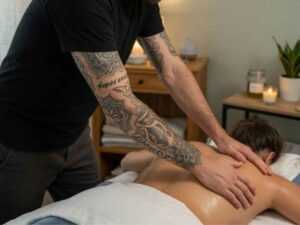
Medical Massage For Auto Accident Whiplash In Olympia WA
Medical massage for auto accident whiplash in Olympia WA is not a spa luxury. It is focused bodywork for people dealing with neck pain, upper back tension, headaches, limited range of motion, and the nervous system shock that can follow a collision.
After a rear end or side impact accident, many people walk away thinking they are mostly fine because there are no broken bones and the pain seems manageable at first. Whiplash often shows up slowly over the next several days as stiffness, soreness, headaches, shoulder tension, jaw discomfort, or a guarded feeling through the neck and upper back. This delayed response happens because soft tissue strain, inflammation, muscle guarding, and nervous system stress can build beneath the surface before they become obvious. Medical massage for whiplash focuses on these deeper patterns instead of treating the session like general relaxation massage.
What Is Medical Massage For Whiplash?
Medical massage for whiplash is a targeted therapeutic approach that works with the muscles, fascia, trigger points, and movement restrictions affected by sudden acceleration and deceleration forces. The goal is not to force the body into relaxation, but to help irritated tissues calm down, improve circulation, reduce protective guarding, and restore more comfortable movement. For many clients, this means focused work around the neck, shoulders, upper back, chest, jaw, and related areas that compensate after the accident.
A careful session begins with the accident history, symptom pattern, and how the injury is affecting daily life. Details such as head position during impact, seat position, headrest height, pain location, headache frequency, sleep disruption, and range of motion all matter. This is what separates clinical bodywork from a routine massage sequence. The work should match the injury, the stage of healing, and the client’s current tolerance and determine the best frequency for a massage schedule based on the clients specific needs.
How Whiplash Affects The Neck And Upper Back
Whiplash can strain the cervical spine and surrounding soft tissue when the head is suddenly thrown forward and backward or side to side. The upper trapezius, levator scapulae, scalenes, suboccipitals, deep neck stabilizers, and upper back muscles may all react with pain, shortening, or protective spasm. The body often tries to stabilize the injured area by tightening nearby structures, which can make the pain spread beyond the original injury site.
This is why whiplash symptoms can include more than neck pain. Some clients feel headaches at the base of the skull, burning between the shoulder blades, reduced ability to turn the head while driving, numbness or tingling sensations, jaw tension, fatigue, or a sense that the body cannot fully settle. A focused massage therapy approach looks at the whole regional pattern, not only the most painful spot.
How Medical Massage Can Help After A Car Accident
Medical massage may help reduce pain and stiffness by improving blood flow, softening guarded muscles, calming irritated trigger points, and helping tissue layers glide more freely. Gentle myofascial work can be useful when the neck feels locked or compressed. Trigger point therapy may help when referral patterns contribute to headaches, shoulder pain, or upper back discomfort. Slow, specific work often produces better results than aggressive pressure, especially when the nervous system is still on high alert after the accident.
For clients looking for massage therapy in Olympia for auto accident whiplash, the most important factor is not simply getting a hard massage. The work should be specific, paced, and responsive to the body’s signals. Too much pressure too soon can make irritated tissue more defensive. The goal is to help the body release protection gradually while improving movement and comfort.
Medical Massage And Nervous System Recovery
Auto accidents are not only mechanical events. They can also shock the nervous system. Even after the immediate danger has passed, the body may remain in a protective state with shallow breathing, restless sleep, heightened pain sensitivity, and difficulty relaxing. This matters because a guarded nervous system can keep muscles tense and slow the return to normal movement.
Medical massage can support nervous system regulation through slower pacing, steady contact, breath awareness, and careful pressure that tells the body it does not need to keep bracing. When the body begins to feel safe again, clients often notice that the neck releases more easily, the shoulders drop, and the breath becomes less restricted. These changes are not abstract. They are part of how the body exits a stress response and reenters a state where repair can happen.
How Long Does Medical Massage Take To Help Whiplash?
The timeline depends on the severity of the accident, how long symptoms have been present, the client’s general health, and whether other providers are involved. Mild whiplash may improve over several focused sessions. More complex cases may require a longer plan, especially when symptoms include headaches, chronic neck tension, sleep disruption, or pain that has lasted for months.
A realistic goal is steady measurable improvement rather than instant correction. Better range of motion, fewer headaches, less neck fatigue while driving, improved sleep, and reduced upper back guarding are all meaningful signs of progress. Each session should respond to what the body presents that day instead of forcing the same routine every time.
Can Medical Massage Help Chronic Whiplash Pain?
Medical massage may still help when whiplash pain has been present for months or even years. Chronic symptoms often involve a combination of restricted soft tissue, sensitized pain pathways, habitual guarding, and movement patterns that developed after the original injury. The acute accident may be over, but the body can keep repeating the protective pattern.
In these cases, the work often needs to be more patient and layered. The goal is to help the body relearn movement without immediately triggering defense. This can include focused neck and upper back work, gentle release around the shoulders and chest, trigger point therapy, and a calm treatment pace that respects the nervous system. Chronic does not always mean permanent. It often means the body needs a clearer path out of the pattern.
What To Expect During A Medical Massage Session
A medical massage session for auto accident whiplash usually begins with a focused conversation about the accident, symptoms, pain levels, movement limitations, and treatment goals. The hands on work may focus more heavily on the neck, shoulders, upper back, and related areas instead of trying to cover the whole body evenly. This keeps the session specific and avoids diluting the therapeutic focus.
Clients should expect to give feedback during the session. Sensation, pressure tolerance, pain referral, emotional response, and changes in movement all provide useful information. The best work is collaborative. The therapist tracks tissue response while the client helps clarify what feels helpful, excessive, relieving, or irritating.
Medical Massage In Olympia WA After An Auto Accident
For people in Olympia dealing with whiplash after a car accident, medical massage can be part of a practical recovery plan when the work is focused, respectful, and clinically aware. Neck injuries are rarely just about one sore muscle. They can involve soft tissue strain, guarded movement, nervous system stress, and compensation throughout the upper body.
Medical massage for auto accident whiplash in Olympia WA should help restore movement, reduce pain, and support the body’s ability to settle after impact. The right approach is not generic. It is specific to the injury, the person, and the way the body is holding the accident long after the moment itself has passed.