
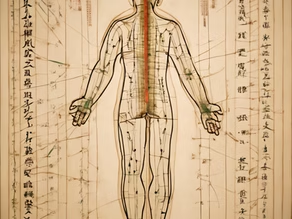
Tui Na – Traditional Chinese Medicine Bodywork Explained
Tui Na is a foundational system of manual therapy within Traditional Chinese Medicine that has been used for thousands of years to influence the body through structured touch, movement, and pressure. The name translates directly to “push” and “grasp,” which reflects the core mechanical actions used throughout treatment, but the system itself is far more complex than those two words suggest. Tui Na is not simply a relaxation method or a collection of massage techniques. It is a clinical approach to bodywork that aims to restore functional balance by working on the body as an interconnected system rather than a series of isolated parts. In modern application, it is best understood as a hybrid between massage therapy, assisted stretching, and neurological input, all working together to improve how the body feels, moves, and regulates itself.
Unlike many Western massage systems that developed through anatomical dissection and muscle specific study, Tui Na evolved within a framework that views the body as an integrated network of structure and function. This means that treatment is not focused solely on where pain is felt, but on why that pain exists within the broader system. A tight shoulder may not be treated as a local issue, but as part of a larger pattern involving posture, breathing, spinal movement, and habitual tension. When applied within a structured approach such which can include tui na massage therapy and traditional chinese bodywork, Tui Na becomes a highly effective tool for addressing both immediate discomfort and long term dysfunction.
The System Behind Tui Na
The theoretical foundation of Tui Na comes from Traditional Chinese Medicine, which describes the body in terms of continuous internal communication. While traditional language refers to Qi and meridians, the functional interpretation aligns with observable patterns in modern practice. Areas of tightness, restricted movement, and chronic discomfort often correspond with reduced circulation, altered nerve signaling, and inefficient muscular coordination. Tui Na addresses these conditions by applying targeted pressure and movement that encourages the body to return to a more balanced state.
The key distinction is that Tui Na does not treat symptoms in isolation. Instead, it identifies patterns of dysfunction and works across them. This approach requires constant feedback between practitioner and client, as well as an ability to adjust techniques in real time. There is no fixed routine. Each session is built around how the body responds moment to moment, which is what allows the work to remain both precise and adaptable.
Core Techniques and Mechanical Application
Tui Na uses a wide range of techniques that include pressing, kneading, rolling, grasping, and rhythmic compression. These are applied with different parts of the body, including fingers, palms, elbows, and forearms, allowing the practitioner to vary pressure and angle depending on the target area. Unlike gliding based massage styles, much of Tui Na involves direct compression into tissue, held for a period of time before transitioning to the next point or movement.
One of the defining features of the system is the integration of movement into the treatment. Rather than working on a static body, the practitioner often guides the client through controlled ranges of motion while applying pressure. This allows deeper access to muscle groups and connective tissue while also improving joint function. The combination of pressure and movement creates a more comprehensive stimulus, influencing both the mechanical structure of the body and the way the nervous system interprets it.
Leverage and positioning are also critical. Practitioners use their body weight rather than isolated muscular effort, which allows for deeper and more consistent pressure without excessive force. This not only improves effectiveness but also ensures that the work can be sustained over time without strain.
Nervous System Regulation
Tui Na has a direct and measurable effect on the nervous system. The sustained pressure and rhythmic input provide consistent sensory feedback, which helps regulate how the body processes tension and movement. In many cases, chronic tightness is not purely a muscular issue but a neurological one, where the body has adapted to hold tension as a default state. Tui Na works by interrupting that pattern and introducing new input that allows the system to reset.
This process often results in a noticeable shift during or after treatment. Muscles that previously felt dense or resistant begin to soften, movement becomes easier, and overall tension decreases. These changes are not temporary in the same way as surface level relaxation. They reflect a deeper adjustment in how the body organizes itself, which is why Tui Na is particularly effective for chronic conditions rather than short term relief.
Movement and Functional Integration
Movement is central to the effectiveness of Tui Na. The body is not designed to function in isolation, and restrictions in one area often lead to compensations elsewhere. By incorporating stretching and joint mobilization directly into the session, Tui Na addresses these compensations at their source. The practitioner may move the client through positions that challenge existing patterns, helping to restore coordination between muscle groups.
This is especially important for individuals dealing with repetitive strain, postural imbalance, or reduced mobility. Over time, the body adapts to inefficient patterns that limit performance and increase discomfort. Tui Na provides a way to break those patterns by combining pressure with movement, allowing the body to reorganize itself into a more efficient state.
Clinical Uses and Applications
Tui Na is widely used for musculoskeletal conditions such as back pain, neck tension, shoulder restriction, and joint stiffness. It is particularly effective in cases where multiple systems are involved, such as chronic tension that has developed over time. Rather than focusing on a single muscle or joint, the treatment addresses the broader pattern that is creating the issue.
In addition to physical conditions, Tui Na is also used to support nervous system regulation. Clients experiencing stress, fatigue, or general imbalance often benefit from the structured input provided by the treatment. The combination of pressure and movement helps bring the body out of a constant state of tension and into a more stable and responsive condition.
This dual effect makes Tui Na valuable not only for pain relief but for overall maintenance. Regular sessions can help prevent the buildup of tension and maintain functional movement, reducing the likelihood of future issues.
What a Session Looks Like
A Tui Na session typically begins with an assessment of the client’s posture, movement, and areas of discomfort. This assessment guides the selection of techniques and helps determine how the session will be structured. Clients may remain clothed, depending on the setting, which allows for greater flexibility in movement and positioning.
During the session, the practitioner applies a combination of techniques that may include deep pressure, rhythmic compression, and assisted movement. The intensity is adjusted continuously based on feedback, ensuring that the work remains effective without becoming excessive. Communication is key, as the goal is to create change within the body rather than force it.
After the session, clients often report a sense of both relaxation and structural reset. Movement feels easier, tension is reduced, and the body feels more balanced. Some mild soreness may occur, particularly if deeper work was performed, but this is typically short lived and followed by improved function.
Differences from Other Massage Systems
Compared to Western massage styles, Tui Na is more dynamic and system focused. Swedish massage emphasizes relaxation through flowing strokes, while deep tissue work targets specific layers of muscle to release tension. Tui Na integrates these ideas but expands on them by incorporating movement and pattern recognition.
It also differs from other pressure based systems such as Shiatsu by placing greater emphasis on manipulation and joint work. This makes it particularly effective for addressing structural issues and improving mobility. Rather than being limited to a single approach, Tui Na adapts to the needs of the client, combining techniques as necessary to achieve the desired outcome.
Modern Relevance and Integration
In modern practice, Tui Na has been integrated with contemporary understanding of anatomy and physiology. Practitioners combine traditional concepts with evidence based methods to create treatments that are both effective and practical. This allows Tui Na to be used alongside other therapeutic approaches, including clinical massage, rehabilitation, and movement training.
The result is a system that remains rooted in its origins while continuing to evolve. By bridging traditional and modern perspectives, Tui Na provides a versatile approach to bodywork that can be adapted to a wide range of conditions and goals.
Conclusion
Tui Na is a comprehensive form of bodywork that combines pressure, movement, and system level awareness to restore balance within the body. It operates beyond simple relaxation, addressing patterns of tension and dysfunction through targeted, adaptive techniques. By influencing both mechanical structure and nervous system regulation, it provides a deeper and more lasting effect than many isolated approaches.
When integrated into a structured therapeutic framework, Tui Na becomes a powerful method for improving mobility, reducing pain, and supporting overall physical resilience. Its ability to adapt to the individual while addressing the body as a whole makes it one of the most effective traditional systems of manual therapy still in use today.