
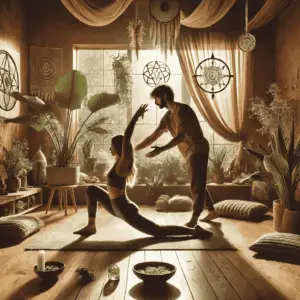
Dynamic Stretching and Incorporation Into Massage and Energy Work
Dynamic stretching is often misunderstood as something reserved for athletes or pre workout routines, but within massage therapy and energy work it serves a far more important role. It becomes the bridge between passive treatment and active integration. When the body is worked on through pressure, release, and manipulation, changes occur in the tissue, but without movement those changes are often temporary. Dynamic stretching allows the body to participate in its own recovery, reinforcing new patterns and stabilizing the results created during treatment.
The human body does not operate in isolated systems. Muscle, fascia, nervous system signaling, and what many describe as energetic awareness all function simultaneously. Massage therapy can create space in the tissue, reduce tension, and interrupt pain cycles, but movement teaches the body how to keep that change. Dynamic stretching introduces controlled motion that tells the nervous system the new range is safe, usable, and sustainable.
Understanding Dynamic Stretching in a Therapeutic Context
Dynamic stretching involves controlled, intentional movement through a joint’s available range of motion. Unlike static stretching, which relies on holding a position, dynamic movement keeps the body engaged and responsive. This engagement activates proprioception, which is the body’s internal awareness of position and movement. When this system is stimulated, the brain receives continuous feedback, allowing it to recalibrate tension and coordination in real time.
In a therapeutic setting, this matters because most chronic tension is not purely muscular. It is neurological. The body holds patterns based on habit, stress, injury, and protective responses. Static pressure can interrupt those patterns briefly, but dynamic movement is what begins to reprogram them.
The Nervous System Response
The effectiveness of dynamic stretching comes from its direct interaction with the nervous system. Every movement sends signals from muscles and joints back to the brain, creating a feedback loop that influences tone, coordination, and perceived safety. When movement is slow, controlled, and paired with steady breathing, the body shifts toward a parasympathetic state. This is where recovery occurs.
Without this shift, deeper massage techniques can feel intense or even resisted. With it, the body becomes receptive. Tension decreases not because it is forced to, but because the system no longer feels the need to hold it. This is where massage therapy becomes more than mechanical work and starts to function as a regulatory process.
Why Movement Extends the Effects of Massage
One of the most common experiences after massage is relief that fades within a day or two. This is not a failure of the treatment, it is a lack of integration. When the body returns immediately to the same patterns without reinforcement, it defaults back to what is familiar. Dynamic stretching interrupts that cycle.
By introducing movement during or after a session, the therapist helps the body recognize new patterns as functional. A released muscle is asked to move through its full range. A joint that was restricted is guided through controlled motion. This teaches the nervous system that the new state is not temporary, it is usable.
Fascia and Movement Integration
Fascia is a continuous connective tissue network that surrounds and interweaves throughout the entire body. It responds to pressure, hydration, and movement. While massage can soften and mobilize fascia, movement is what reorganizes it. Dynamic stretching applies directional load, encouraging the tissue to adapt rather than return to previous restrictions.
This is why combining manual therapy with movement can produce more durable outcomes. The tissue is not only released, it is trained. Over time, this leads to improved elasticity, reduced stiffness, and better distribution of mechanical stress across the body.
Connection to Energy Work
Within energy based practices, movement has always been present even if described differently. Systems such as Qi Gong and yoga rely on controlled motion to influence internal flow. The principle is consistent. Where attention and movement go, change follows. Dynamic stretching provides a physical framework for these concepts, allowing them to be experienced rather than abstractly understood.
When movement is combined with focused awareness, the effects extend beyond muscle and joint function. Breathing deepens, perception shifts, and the body becomes more internally connected. Whether one describes this as nervous system regulation or energy movement, the mechanism remains the same. The body is being guided out of stagnation and into flow.
The Role of Breath
Breath is the control system that determines how the body responds to movement. Fast, shallow breathing signals stress and keeps the body guarded. Slow, controlled breathing signals safety and allows the body to open. When dynamic stretching is paired with breath, each movement becomes more effective and less resistant.
Exhalation is particularly important. During the exhale phase, muscle tone naturally decreases, allowing greater range without force. Coordinating movement with this phase increases effectiveness while reducing strain. Over time, this pairing retrains the body to associate movement with ease rather than effort.
Emotional and Somatic Release
The body stores patterns that are not purely physical. Movement habits often reflect long standing protective responses. When dynamic stretching challenges those patterns, the response can include emotional release. This is not uncommon and should not be treated as abnormal. It is part of the body reorganizing itself.
A controlled environment allows these responses to occur without overwhelm. The goal is not to force release but to allow the body to process as it becomes ready. Movement provides a pathway for that process, creating space both physically and neurologically.
Application Within a Session
Dynamic stretching can be introduced at multiple points during treatment. Early in a session, it helps assess restriction and warm tissue. During the session, it reinforces changes created through manual techniques. At the end, it integrates those changes into functional movement patterns.
The movements themselves do not need to be complex. Shoulder circles, spinal rotations, and controlled hip movements are often enough when applied with precision. The key is that each movement has purpose and directly relates to the work that has already been done.
Long Term Benefits
When dynamic stretching becomes part of regular bodywork, the effects extend beyond the session. Clients develop better awareness of how they move, how they hold tension, and how to maintain change. This reduces dependency on treatment and increases personal capacity.
Posture can improve, mobility can increase, and chronic tension patterns may begin to lose their hold. Instead of repeatedly addressing the same issues, the body starts to adapt in a more sustainable way. This is where massage therapy transitions from short term relief into long term improvement.
Conclusion
Dynamic stretching is not an add on. It is a critical component that connects treatment to function. By engaging the nervous system, reinforcing new movement patterns, and supporting both physical and internal regulation, it transforms how the body responds to therapy.
When applied correctly, it turns passive work into active change. It gives the body a way to hold onto what has been created during a session and carry it forward into daily life. That is where real progress happens.
If you want more in depth reading on movement, nervous system regulation, and how stretching interacts with massage and energy work, you can find additional articles in the movement, stretching, and energy-focused blog.