
Reiki Massage Metaphysical Healing Service
1946 4th Ave E
Olympia WA, 98506
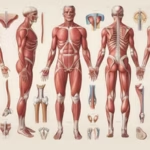
Massage therapy is a clinical, hands-on method for treating musculoskeletal tension, improving range of motion, and supporting nervous system regulation. Used for both pain relief and preventive care, it helps restore physical balance, reduce stress patterns, and improve the body’s ability to recover and function efficiently.
Massage therapy is a structured, hands-on approach designed to directly influence the musculoskeletal system and the nervous system. While it is often associated with relaxation, its primary role in a clinical context is to restore movement, reduce pain, and improve the body’s ability to recover from physical and neurological stress. The body adapts continuously to repetitive movement, sustained posture, and environmental demands. When these demands exceed the body’s ability to recover, patterns of tension begin to form. These patterns are not random. They develop through repeated strain and become embedded over time, restricting mobility and reducing overall function.
As these patterns develop, the body begins to operate within a limited range of motion. Muscles remain partially contracted, connective tissue becomes less responsive, and circulation is reduced. This creates a condition where discomfort persists even during rest. Massage therapy works to reverse these adaptations by restoring tissue elasticity, improving blood flow, and encouraging the body to release unnecessary tension. This process allows the body to return to a more neutral and efficient state.
Massage therapy operates through a combination of mechanical and neurological processes. Mechanically, pressure applied to muscle tissue and fascia reduces restriction and improves circulation. Increased blood flow delivers oxygen and nutrients to tissues that have become tight or fatigued while supporting the removal of metabolic waste. This allows tissues to function more effectively and reduces the sensation of stiffness.
Neurologically, massage therapy influences how the body perceives tension and pain. Sensory receptors within the skin and muscles respond to applied pressure by sending signals to the brain. These signals can reduce pain perception and shift the nervous system out of a heightened stress response. As this shift occurs, muscles are able to relax more fully, and the body enters a state where recovery processes become more active.
This dual effect is what makes massage therapy effective across a wide range of conditions. It does not rely on a single pathway but instead works with the body as an integrated system, addressing both structure and response at the same time.
Musculoskeletal pain is often the result of accumulated tension and restricted movement. When muscles remain tight for extended periods, they limit the body’s ability to move efficiently. This creates additional strain on surrounding structures, leading to discomfort that can become chronic. Massage therapy addresses this by releasing tension within the muscle fibers and improving the flexibility of connective tissue.
As tension is reduced, movement becomes more efficient. The body requires less effort to perform everyday tasks, and the likelihood of strain decreases. This creates a feedback loop where improved movement reduces tension, and reduced tension further improves movement. Over time, this leads to a more stable and balanced physical state.
In cases where tension is more deeply rooted, additional techniques are required to address underlying restrictions. These methods focus on the fascia, which can become tight and limit movement across multiple muscle groups. Structured approaches such as deep tissue and myofascial release techniques for resolving chronic structural tension are used to restore mobility and reduce long-term restriction at a deeper level.
The nervous system plays a central role in how the body holds and releases tension. When stress is present, the body enters a heightened state where muscles remain engaged and recovery is limited. This response is necessary in short-term situations but becomes problematic when it persists. Chronic activation prevents the body from returning to a balanced state, leading to ongoing tension and reduced recovery capacity.
Massage therapy helps regulate this response by providing consistent sensory input that signals safety to the nervous system. As the body begins to recognize that it is not under threat, it becomes possible to shift into a state associated with rest and recovery. This shift allows physiological processes such as tissue repair and circulation to function more effectively.
The connection between massage therapy and nervous system regulation is further explained in how therapeutic bodywork disrupts chronic stress driven tension patterns, where structured techniques are used to reduce long-term activation and restore balance.
Range of motion is a key indicator of physical function. When muscles and connective tissue are restricted, movement becomes limited and less efficient. This can affect daily activity as well as athletic performance. Massage therapy improves range of motion by releasing tension and restoring flexibility within the tissue.
As restrictions are reduced, movement becomes smoother and more coordinated. This reduces the likelihood of compensation patterns, where the body overuses certain muscles to make up for limitations in others. By restoring balanced movement, massage therapy helps prevent additional strain and supports long-term function.
Improved mobility also contributes to overall comfort. When the body is able to move without restriction, it requires less effort to maintain posture and perform tasks. This creates a more sustainable state where discomfort is less likely to develop.
Massage therapy is not limited to treating existing discomfort. It is also an effective method for preventing tension from developing into more serious conditions. By addressing patterns early, it helps maintain balance within the body and reduces the likelihood of chronic pain.
Preventive care focuses on maintaining mobility, reducing stress, and supporting recovery. Regular sessions allow the body to release tension before it accumulates, making it easier to sustain a higher level of function. This approach shifts massage therapy from a reactive treatment to a proactive strategy for maintaining health.
Over time, individuals who incorporate massage therapy into their routine often experience improved resilience and fewer episodes of discomfort. This reflects a change in how the body responds to both physical and neurological stress.
While a single session can provide noticeable relief, long-term results require consistency. Tension patterns develop over time and must be addressed repeatedly to fully resolve. Regular massage therapy reinforces the body’s ability to release tension and maintain balance.
As the body becomes more accustomed to this process, it becomes easier to sustain a state of recovery. This reduces the likelihood of returning to previous patterns of tension and improves overall function. Consistency also allows for more precise treatment, as patterns can be identified and addressed more effectively over multiple sessions.
Long-term outcomes include improved mobility, reduced pain, and a greater ability to manage stress. These changes reflect a shift in how the body operates, allowing for more efficient movement and recovery.
Massage therapy services are provided in Olympia WA, offering a consistent and structured approach to treatment for individuals seeking clinical bodywork. Each session is adapted to how the body presents at the time, allowing for adjustments in pressure, pacing, and technique. This ensures that treatment remains effective without creating unnecessary strain.
The objective is not only to reduce discomfort in the moment, but to restore the body’s ability to regulate itself over time. By addressing both musculoskeletal and nervous system factors, massage therapy provides a comprehensive method for improving physical function and supporting long-term health.