
The Benefits of Therapeutic Massage
Massage therapy is often misunderstood as a luxury or occasional indulgence, but in practice it functions as a direct and measurable intervention for both physical and mental strain. People searching for the benefits of therapeutic massage are usually dealing with something specific, whether it is chronic pain, stress that no longer resolves on its own, poor sleep, or a general sense that the body is not recovering the way it should. Understanding what massage actually does clarifies why it continues to be used as a practical method of maintaining health. When applied consistently, therapeutic massage aimed at recovery moves beyond temporary relief and begins to change how the body functions over time.
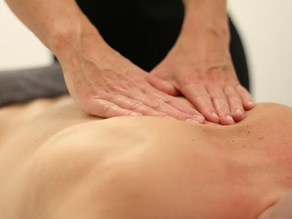
The foundation of therapeutic massage is the mechanical interaction with soft tissue. Muscles, fascia, and connective structures respond to pressure in ways that influence circulation, nerve signaling, and movement patterns. Areas that have been restricted due to tension or overuse begin to release when pressure is applied in a controlled and targeted way. This change is not superficial. It alters how the body distributes load, how joints move, and how tension is held across entire regions rather than isolated points.
One of the most immediate benefits of massage is the shift in the nervous system. Most people operate in a constant state of low level stress, where the body remains in a heightened state of alert even when there is no immediate threat. This condition affects heart rate, breathing patterns, muscle tone, and hormone regulation. Massage interrupts that pattern by activating the parasympathetic nervous system, which is responsible for recovery and regulation. As this shift occurs, breathing slows, muscle guarding decreases, and the body begins to move toward a more stable baseline.
Pain reduction is one of the most common reasons people seek therapeutic massage, and it is also one of the most consistently observed outcomes. Chronic pain often develops not from a single injury, but from repeated strain, poor movement patterns, or prolonged inactivity. Over time, the body adapts by creating areas of tightness that restrict movement and reinforce discomfort. Massage works directly on these patterns by reducing tension in the affected tissues and improving blood flow to areas that have been under stress. This combination helps decrease the intensity of pain while also improving overall mobility.
Circulation plays a significant role in how the body recovers from both daily stress and physical activity. When muscles remain tight for extended periods, blood flow through those areas becomes less efficient. This can lead to fatigue, stiffness, and a slower recovery process. Massage increases local circulation by physically moving blood through compressed tissue and allowing fresh oxygen and nutrients to reach areas that need them. Improved circulation supports the body’s natural repair processes and contributes to a more consistent level of energy and function.
Mobility and flexibility are closely tied to how muscles and connective tissues behave under tension. When certain muscles shorten or become restricted, they limit the range of motion of the joints they influence. This creates compensations in other parts of the body, often leading to pain in areas that were not originally the source of the problem. Therapeutic massage addresses these restrictions by working along muscle fibers and connective tissue lines, allowing the body to regain a more natural range of motion. As movement improves, strain on surrounding structures decreases.
Stress reduction is often discussed in general terms, but its physical effects are concrete. Elevated stress levels increase muscle tension, disrupt digestion, and interfere with sleep. Over time, these effects compound and create a cycle that is difficult to break through passive methods alone. Massage provides a direct input that reduces this cycle by lowering overall tension and allowing the body to enter a state where recovery processes can occur. This is why people often report feeling more clear and stable after a session, not just relaxed.
Sleep quality is another area where massage produces noticeable changes. Difficulty sleeping is frequently tied to both physical discomfort and an overactive nervous system. When the body cannot fully relax, it struggles to reach deeper stages of sleep that are necessary for recovery. By reducing muscle tension and calming the nervous system, massage creates conditions that make it easier to fall asleep and remain asleep. Over time, improved sleep contributes to better physical recovery, improved mood, and more consistent energy levels.
The mental effects of therapeutic massage are closely connected to its physical impact. When pain decreases and the body is no longer in a constant state of tension, cognitive load is reduced. Focus improves because attention is not being diverted to discomfort. Mood stabilizes as stress hormones decrease and the body returns to a more regulated state. These changes are not separate from the physical work being done. They are a direct result of how the body and nervous system interact.
The benefits of therapeutic massage are not dependent on a single session. While immediate relief is common, the more significant changes occur through consistency. As the body is repeatedly brought out of patterns of tension and into states of recovery, those states begin to last longer. Movement becomes easier, pain becomes less frequent, and the overall baseline of how the body feels begins to shift. This is where massage transitions from a reactive solution into a proactive method of maintaining function.
Therapeutic massage is most effective when it is viewed as part of a broader approach to managing physical and mental stress. It does not replace movement, rest, or basic health habits, but it directly supports them by addressing the mechanical and neurological factors that limit recovery. When applied with intention and consistency, it becomes a reliable method for reducing strain, improving mobility, and maintaining a more stable state of physical well being.