Reflexology: The Short Version
Reflexology is a structured system of working the feet, hands, and sometimes ears with the idea that specific points reflect the rest of the body. It is not casual foot rubbing. It uses mapped zones and deliberate pressure to calm the nervous system, ease tension, and support the body’s own repair work. It sits in the space between clear, physical touch and more subtle energy‑based models.
The “short version” here means a direct explanation without brochure chatter, not a short word count. The aim is to explain what reflexology is, what it is good for, and where it realistically fits in a health plan, so you can decide how you want to use it.
Where Reflexology Comes From
Versions of the basic idea—working one part of the body to influence the whole—show up in several older medical systems. Chinese medicine has long emphasized channels of qi and points that influence distant organs. Egyptian tomb art shows what look like foot and hand work aimed at health, not just comfort. Indigenous traditions have used pressure, rubbing, and heat on the feet as part of general care.
Modern Western reflexology as a named method crystallizes in the early twentieth century. Practitioners took the older ideas about zones and channels and turned them into detailed maps: this area of the big toe for the head, this part of the arch for the digestive tract, this area near the heel for the low back, and so on. Those maps vary a bit by school, but the principle is the same: the feet and hands are treated as compact representations of the whole body.
How Reflexology Is Supposed to Work
In the reflexology model, every major organ and region has a corresponding point or area on the feet and hands. Working those points is thought to influence circulation, nerve activity, and the overall tone of the associated system. The mechanism is described in different ways depending on who you ask: energetic reflection, neurological pathways, fascial connections, or some combination.
If you strip away competing theories, a few solid things remain. The feet and hands are packed with nerves. They are also the parts of the body we abuse and ignore the most. Applying focused, tolerable pressure there sends a strong signal up through the nervous system. That alone can change how pain is processed, how tight muscles are holding, and how the body allocates resources. When the body stops bracing quite so hard, everything from digestion to sleep has more room to normalize.
On the energetic side, many people experience reflexology as something more than just “pressure feels good.” They describe shifts in mood, imagery, and sense of connection that are not easily reduced to mechanics. You do not have to choose one explanation or the other to get benefit. You just have to notice what actually changes for you over time.
The Maps: Feet, Hands, and Ears
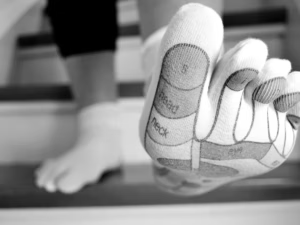
Most reflexologists start with the feet. They are weight‑bearing, easy to access, and loaded with small joints, ligaments, and nerve endings. The standard map divides the sole into regions: toes and ball for head and chest, mid‑arch for abdominal organs, heel for low back and pelvic structures. The exact boundaries differ by school, but the logic is there: a vertical and horizontal grid that gives the practitioner a way to organize their work.
The hands carry a similar map. They are useful when foot work is not appropriate or when home care is the focus. The ears are sometimes used as well, drawing on auricular therapy traditions that treat the ear as a miniature body. Ear work is usually lighter and shorter but can be a good option for people who are on their feet all day and do not want more sensation there.
In practice, a session often moves through all these areas in a systematic way, with extra time spent on points related to the client’s main complaints. The maps are a guide, not a rigid law. Skilled practitioners watch the client’s actual responses more closely than the chart.
What a Reflexology Session Feels Like
A typical session starts with a quick health intake: what you are dealing with now, what else you are receiving care for, and what you want from the work. Then you lie back or recline. Shoes and socks come off for foot work; hands and ears are easy to reach as you are. The environment is quiet and low‑stimulus on purpose, so the nervous system can stop scanning for threats.
The practitioner uses thumbs and fingers to move through the mapped areas, pressing, sliding, and sometimes hooking in and holding on tender points. The pressure should be firm but within your tolerance. Sharp, breath‑catching pain is not the goal. Mild to moderate tenderness in certain spots is common and often eases as the area is worked.
As the session goes on, most people feel heaviness in the limbs, warmth in the feet and hands, and a general drop in mental speed. Some drift toward sleep. Others hover in that in‑between state where thoughts soften and you are aware of the body more than the outside world. It is not unusual for delayed emotional material to surface: a wave of sadness, irritability, or relief. A good practitioner will give that space without turning the session into a forced processing workshop.
What Reflexology Is Good For
Realistically, reflexology is best used for patterns that are clearly influenced by nervous system load: stress, general tension, non‑specific aches, functional digestive complaints, stubborn “I can’t ever fully relax” states, and the fatigue that comes from living on alert. It is not an emergency intervention, and it is not a replacement for medical care where there are clear structural or systemic problems that need direct treatment.
People who receive consistent reflexology often report looser breathing, warmer extremities, improved sleep, fewer tension headaches, and less “wired and tired” baseline feeling. Some notice their digestion settling, their cycle symptoms shifting, or their ability to handle daily stress improving a notch or two. None of this is guaranteed. It depends on frequency, overall health, and what else is being done. The point is that helping the nervous system stop gripping everything as a crisis tends to move many things in a better direction.
For some, reflexology is also a way to learn what their own body is like when it is not braced against the day. That reference point is useful. Once you have felt it, it is easier to notice when you are sliding away from it and to use other tools to correct course before things get worse.
What It Is Not
Reflexology is not a way to diagnose disease. The fact that a point on your foot is tender does not mean the mapped organ is damaged. Charts that claim you can read precise internal conditions from the feet alone are overstating the case. Tenderness can mean local tissue strain, general stress, or simple sensitivity.
It is also not a cure‑all. Serious medical issues require appropriate testing and treatment. Reflexology can sit alongside that as support, but it does not replace it. Any practitioner claiming to “remove toxins from your liver through your big toe” or cure complex illnesses with a few sessions is selling fantasy, not grounded care.
The work is also not for everyone at every moment. Acute infections, open wounds, fractures, certain vascular conditions, and some pregnancies may call for modification or postponement. Honest practitioners will ask, listen, and adapt instead of pushing a standard protocol regardless of what is in front of them.
How Reflexology Fits Into a Larger Plan
Used well, reflexology is one piece in a larger pattern. It can be a good entry point for people who are touch‑averse or overwhelmed by the idea of full bodywork. The contained focus on feet or hands feels safer while still giving the nervous system a chance to reset. It can be a maintenance tool between deeper structural sessions, keeping overall tone down so the body does not slide fully back into old habits.
For people who stand all day, wear bad shoes, or carry their whole life in their shoulders and jaw, this work offers a way to unload some of that strain indirectly. For people doing trauma work, chronic illness management, or major life transitions, it can provide a quiet, non‑verbal way to remind the system that it is still allowed to have calm states.
The decision about how often to receive it is practical: what your body seems to respond to, what your schedule and finances allow, and how it fits with everything else you are doing. Weekly sessions for a while can be useful in acute stress; monthly may be enough for maintenance once things stabilize.
Self‑Care and Home Use
One advantage of reflexology is that some of the work can be translated into simple self‑care. You do not need to memorize the whole map to get value. Spending a few minutes each day using your thumb to slowly work along the arches, heels, and toes of your own feet can loosen local tension and signal the nervous system to downshift. The same is true for slow, deliberate pressure and rolling motions across the palms and along the fingers.
This does not replace skilled work, but it extends the effect of sessions and teaches you to actually pay attention to your own extremities instead of treating them as disposable transport units. Over time, you will learn where you habitually hold tension and how to soften it before it becomes a bigger problem.
Putting It in Plain Terms
If you strip reflexology down to its essentials, you are doing three things: giving the nervous system a focused, non‑threatening input; moving blood and lymph through overworked tissue; and including the feet and hands in your idea of what needs care. The maps, history, and theories give practitioners a framework, but the lived effect is straightforward: less tension, more circulation, a clearer sense of being in a body instead of just dragging it around.
If you want to see how reflexology and related methods show up alongside massage, Reiki, and sound work in concrete treatment plans, you can explore our integrated massage and reflexology article collection for grounded examples.