
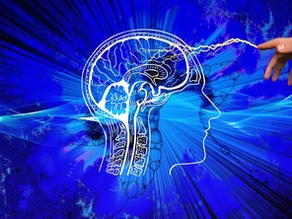
Neurobiology of Touch – Massage and Mental Health
The relationship between physical touch and mental health is not abstract, it is biological, measurable, and deeply embedded in the human nervous system. Massage therapy operates within this framework, influencing neurological pathways, hormonal balance, and emotional regulation through direct stimulation of the body’s sensory network. The skin is not simply a protective layer, it is an active sensory organ connected to the brain through a dense system of receptors that translate pressure, temperature, and movement into neurological signals. These signals do not remain localized, they influence mood, stress response, and overall mental state in ways that are both immediate and cumulative.
When structured touch is applied through massage, it activates mechanoreceptors located within the skin and deeper tissues. These receptors communicate with the central nervous system, specifically areas of the brain responsible for emotional processing, threat detection, and physiological regulation. This is where massage shifts from being a physical service to a neurological intervention. Individuals seeking consistent therapeutic massage focused on stress reduction and nervous system regulation are not simply addressing muscle tension, they are engaging systems that control how the body experiences and processes stress at a foundational level.
The Nervous System Response to Touch
The human nervous system operates through two primary branches, the sympathetic and parasympathetic systems. The sympathetic system governs alertness, stress, and survival responses, while the parasympathetic system governs recovery, relaxation, and restoration. In modern conditions, many individuals remain locked in a sympathetic dominant state, where stress hormones remain elevated and the body does not fully return to baseline. Massage therapy directly influences this imbalance by stimulating pathways that shift the body toward parasympathetic activation.
This shift is not theoretical. It is reflected in measurable reductions in heart rate, decreased muscle tension, and changes in breathing patterns during and after treatment. The body begins to exit a defensive state and re-enter a restorative one. Over time, repeated exposure to this shift retrains the nervous system, allowing individuals to access states of calm more easily outside of the treatment environment. This is one of the primary reasons consistent massage produces results that extend beyond the session itself.
Hormonal and Neurochemical Effects
Touch influences the release of key neurochemicals that regulate mood and emotional stability. Among these, oxytocin plays a central role. Often referred to as a bonding hormone, oxytocin promotes feelings of safety, trust, and connection. Its release during massage creates a physiological environment where the body is less guarded and more receptive to change. At the same time, cortisol levels decrease, reducing the intensity of the stress response that many individuals carry chronically.
In addition to oxytocin, massage has been associated with increased levels of serotonin and dopamine. These neurotransmitters contribute to mood regulation, motivation, and overall psychological balance. The combined effect is not simply relaxation, it is recalibration. The body is moved away from a stress dominant chemistry and toward a more stable and functional baseline. This is why individuals often report improved mood, better sleep, and increased emotional resilience following regular sessions.
Brain Activation and Emotional Processing
The brain does not treat touch as a neutral input. Specific regions, including the insular cortex and anterior cingulate cortex, are activated in response to therapeutic contact. These areas are associated with emotional awareness, internal state perception, and the integration of physical and psychological experience. When these regions are engaged through massage, the individual is not only experiencing physical change but also processing internal states in a different way.
This explains why massage can produce emotional responses that seem disproportionate to the physical input. Stored stress, unresolved tension, and habitual patterns of holding can be accessed and released through touch without requiring verbal processing. The body and brain are working together to reorganize patterns that have been maintained over time. This is not mystical, it is a function of how the nervous system stores and responds to experience.
Long Term Effects on Mental Health
Short term relaxation is the most visible outcome of massage, but the long term effects are where the real value exists. Individuals who receive consistent treatment often experience reductions in baseline anxiety, improved emotional regulation, and increased tolerance to stress. The nervous system becomes less reactive and more adaptive. Instead of remaining in a constant cycle of tension and release, the body begins to maintain a more balanced state.
This has direct implications for conditions such as chronic stress, anxiety disorders, and trauma related responses. While massage is not a replacement for clinical mental health treatment, it functions as a powerful complementary tool that addresses the physiological side of psychological conditions. By regulating the body, it indirectly supports the mind, creating conditions where other forms of treatment can be more effective.
The Role of Consistency
The neurobiological effects of massage are cumulative. A single session can interrupt a stress cycle, but consistent sessions are required to create lasting change. The nervous system adapts through repetition. Each time the body is guided into a parasympathetic state, that pathway becomes easier to access. Over time, this reduces the overall burden of stress and improves the body’s ability to recover from both physical and emotional strain.
This is why structured, ongoing treatment produces significantly better outcomes than occasional sessions. The goal is not temporary relief, but long term regulation. When massage is approached as part of a broader strategy for maintaining health, rather than a reaction to discomfort, its impact becomes significantly more pronounced.
Final Perspective
The neurobiology of touch makes one thing clear, massage therapy is not simply about relaxation or muscle work, it is a direct intervention into the systems that control stress, emotion, and recovery. By engaging the nervous system, altering neurochemical balance, and activating brain regions associated with emotional processing, massage creates measurable change that extends beyond the physical body. For individuals dealing with chronic stress, mental fatigue, or emotional overload, structured touch provides a pathway back to regulation that is both immediate and sustainable when applied consistently.