Holistic Wellness Guide to Reiki, Energy Healing, and Bodywork
Holistic wellness is often described as an approach that considers the entire person rather than isolated symptoms, but that definition only becomes meaningful when it is grounded in function. Most people searching for Reiki, energy healing, or bodywork are not looking for abstract philosophy. They are looking for relief from persistent tension, a way to regulate stress that no longer resolves on its own, and a method for restoring a sense of stability that has been disrupted over time.
In practice, holistic care operates as a system. It integrates multiple methods that influence the body through different pathways, yet ultimately converge on the same objective. Improve regulation, reduce accumulated stress, and restore adaptability. Massage therapy, Reiki, and energy-based practices are often grouped together because they act on different layers of the same process rather than functioning as separate categories.
The body does not isolate physical tension from emotional experience or neurological state. Tightness in the shoulders, restricted breathing, fatigue, and mental overload often appear together because they are driven by the same underlying mechanisms. A holistic model works across those layers simultaneously, allowing change to occur in a coordinated way rather than in isolation.
What Holistic Wellness Actually Means in Practice
Holistic wellness is not a single technique or philosophy. It is a framework for understanding how the body maintains function. It recognizes that the body operates through interconnected systems that include structure, perception, and regulation. When one system is disrupted, the others compensate, often leading to patterns that persist long after the original cause has resolved.
In practical terms, this means that addressing symptoms alone is rarely sufficient. Chronic tension, fatigue, and stress-related discomfort are not isolated problems. They are expressions of a system that has adapted to sustained input. Holistic care focuses on changing that input so the system can reorganize itself.
This approach does not reject conventional care. Instead, it fills the gap between acute treatment and long-term regulation. It addresses the patterns that remain after primary interventions have been completed, providing a pathway for sustained improvement.
Understanding the Role of Bodywork
Bodywork provides the most direct point of entry into holistic care because it acts on the physical structures that hold tension. Muscles, fascia, and connective tissue adapt continuously to posture, movement, and stress. Over time, these adaptations can become fixed, reducing mobility and increasing discomfort.
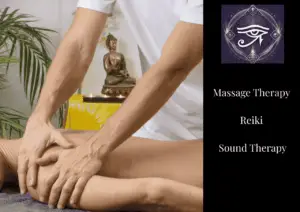
Massage therapy interrupts these patterns through controlled mechanical input. It improves circulation, reduces localized tension, and signals the nervous system to decrease protective guarding. While the immediate effect is often relief, the deeper impact is regulatory. The body shifts out of a constant stress response and into a state where recovery becomes possible.
This makes bodywork a practical starting point for individuals new to holistic practices. It provides immediate feedback, allowing the individual to experience measurable change in how the body feels and functions.
Reiki and Energy Healing Explained
Reiki and energy-based practices operate on a different but complementary level. Rather than applying force to tissue, they provide subtle input that influences how the nervous system organizes its response. This input is delivered through light touch or near-body positioning, creating a consistent and non-threatening sensory environment.
The body responds to this input by reducing activation. Breathing slows, muscle tone decreases, and internal pressure stabilizes. These changes reflect a shift in autonomic nervous system activity, specifically a movement away from sustained alertness toward a regulated state.
While often described in energetic terms, these responses can be understood functionally. The body is highly sensitive to context. When placed in an environment that signals safety and predictability, it reduces defensive patterns and allows recovery processes to occur.
The Connection Between Physical and Energetic Systems
The distinction between physical and energetic systems is often presented as a separation, but in practice, they are interdependent. Muscle tension affects breathing. Breathing influences nervous system regulation. Nervous system regulation shapes perception and emotional response.
When bodywork reduces tension in the chest and shoulders, breathing improves. When breathing improves, the nervous system shifts toward balance. That shift is often experienced as increased clarity, reduced internal pressure, or a sense of grounding.
Energy-based practices support this process by influencing how the body interprets input. They do not replace physical work but enhance it by improving the system’s ability to integrate change.
Common Conditions and Use Cases
Holistic wellness approaches are often applied in situations where patterns persist without clear structural cause. These include chronic tension, stress-related fatigue, recurring discomfort, and difficulty recovering from daily demands.
Individuals experiencing burnout or prolonged stress exposure frequently benefit from this approach because it addresses the underlying regulatory imbalance rather than isolated symptoms. Similarly, those with anxiety-related physical patterns, such as shallow breathing or persistent muscular contraction, may experience improvement through combined methods.
Sleep disruption, reduced mobility, and general fatigue are also common entry points. In each case, the underlying issue is not a single malfunction but a system that has adapted to sustained stress without adequate recovery.
Comparisons Between Modalities
Massage therapy and Reiki are often compared as separate options, but their effectiveness increases when they are combined. Massage therapy provides direct structural change, while Reiki supports internal regulation. One addresses the physical pattern, the other influences how the body maintains that pattern.
Other approaches, such as movement-based therapies or sound-based practices, can also be integrated. Each method contributes a different type of input, allowing the system to adapt more completely.
The key distinction is not which method is superior, but how they are used together. A single approach can produce results, but integration creates a broader and more stable outcome.
Cost, Accessibility, and Entry Points
One of the most common questions involves cost and accessibility. Holistic care exists across a wide range of price points depending on the modality and practitioner. Structured bodywork sessions are often the most accessible entry point because they provide immediate and measurable results.
Energy-based sessions may vary in cost depending on duration and specialization. For individuals new to this type of work, starting with a single session can provide enough information to determine whether the approach is effective for their needs.
Accessibility also includes availability. In many areas, including Olympia, WA, practitioners offer a range of services that can be combined or approached individually based on preference and response.
How to Choose the Right Practitioner
Selecting a practitioner involves evaluating both skill and approach. Technical knowledge is important, but so is the ability to adapt to the individual. Holistic care is not standardized. It requires responsiveness to how the body presents in real time.
Clear communication, consistent pacing, and a focus on regulation rather than intensity are indicators of effective practice. The goal is not to apply maximum pressure or force but to create conditions that allow the body to release tension without resistance.
Experience across multiple modalities can also be beneficial, as it allows the practitioner to integrate methods based on the individual’s needs rather than relying on a single approach.
What to Expect from Holistic Sessions
Sessions are typically structured to minimize external stimulation and allow the body to focus on internal processes. The environment is quiet, and the pacing is controlled. Work progresses gradually, with adjustments made based on how the body responds.
Clients often notice changes in breathing, muscle tone, and awareness during the session. Some experience a sense of heaviness or grounding, while others report increased clarity. These responses reflect shifts in regulation rather than isolated effects.
The process is not forced. Some changes occur immediately, while others require repeated sessions to become stable. This variability is normal and reflects the complexity of the system being addressed.
Consistency and Long Term Adaptation
Holistic care is cumulative. A single session can produce noticeable change, but long-term improvement depends on repeated input that reinforces new patterns. Over time, the body begins to operate differently.
Tension accumulates more slowly. Recovery becomes more efficient. The system becomes less reactive to stress and more capable of maintaining balance. These changes are gradual but tend to be more stable because they are integrated into how the body functions.
Holistic Wellness Guide in Olympia, WA
For those exploring reiki energy healing for stress reduction and whole body balance in Olympia, WA, the most effective approach is one that integrates structure, regulation, and consistency. Holistic wellness is not defined by a single method but by how well those methods work together to restore function. When applied correctly, it provides a practical and sustainable path toward reducing tension, improving recovery, and maintaining long-term stability.