
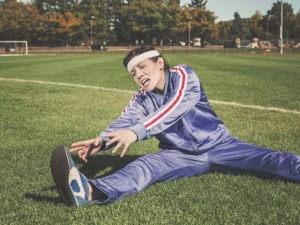
How Does Massage Impact Sports Performance?
Athletic performance is not determined by training alone. It is the result of how effectively the body can handle stress, recover from exertion, and maintain consistent function over time. Every workout creates fatigue, microscopic muscle damage, and neurological demand. Without proper recovery, these effects accumulate, leading to decreased performance, restricted movement, and increased injury risk. This is where massage therapy for sports performance and recovery becomes a critical component of a well-structured training system, supporting both immediate performance and long-term physical resilience.
Massage does not replace strength training, conditioning, or skill development. Instead, it improves the body’s ability to benefit from those activities. By maintaining tissue quality, improving circulation, and regulating the nervous system, massage allows athletes to train more effectively and recover more efficiently between sessions.
How Massage Improves Sports Performance
Massage improves performance by addressing the condition of soft tissue. Muscles that are repeatedly used under load tend to develop tension, adhesions, and restricted movement patterns. This reduces efficiency and increases the energy required to perform basic movements. Over time, these restrictions limit power output, coordination, and endurance.
By reducing tension and restoring normal tissue mobility, massage allows muscles to contract and relax more effectively. This improves movement quality, making actions such as running, lifting, or rotating more efficient. When movement becomes more efficient, less energy is wasted, and performance naturally improves.
Additionally, massage helps normalize communication between the nervous system and muscular system. When muscles are chronically tight, neurological signaling can become disrupted, leading to compensations and altered movement patterns. Releasing tension helps restore more balanced muscle activation, which supports strength, coordination, and control.
Massage and Muscle Recovery
Recovery is the foundation of performance. During training, muscle fibers experience microtrauma, and metabolic byproducts accumulate within the tissue. If these processes are not resolved efficiently, fatigue persists and performance declines.
Massage supports recovery by increasing circulation to affected areas. Improved blood flow helps deliver oxygen and nutrients necessary for repair while assisting in the removal of metabolic waste. This process does not eliminate the need for rest, hydration, or nutrition, but it enhances the body’s ability to use those recovery mechanisms effectively.
Faster recovery allows athletes to return to training sooner and with better quality movement. Over time, this consistency leads to greater overall progress compared to cycles of overtraining and forced rest due to excessive fatigue or soreness.
Does Massage Reduce Muscle Soreness?
Delayed onset muscle soreness is a common response to intense or unfamiliar activity. It can reduce strength, limit range of motion, and interfere with subsequent training sessions. Massage helps reduce the intensity and duration of soreness by improving circulation and decreasing stiffness within the tissue.
When muscle tissue becomes less rigid, movement becomes easier and less painful. This allows athletes to maintain training frequency without being limited by discomfort. While soreness may still occur, it becomes more manageable and less disruptive to performance.
Impact on Flexibility and Range of Motion
Flexibility is not simply about stretching. It depends on the condition of muscles, fascia, and connective tissue. When these structures become tight or restricted, they limit joint movement and create compensatory patterns.
Massage improves flexibility by reducing resistance within the tissue. As muscles and fascia become more pliable, joints are able to move through a greater range without strain. This improves biomechanics during athletic activity, leading to more efficient force production and reduced injury risk.
For athletes, increased range of motion directly affects performance in activities that require speed, power, or precision. Whether it is a deeper squat, a longer stride, or improved shoulder mobility, these changes contribute to measurable improvements in output.
Best Massage Techniques for Athletes
Different techniques serve different purposes within sports performance. Deep tissue massage is commonly used to address chronic tension and adhesions that develop over time. Trigger point therapy targets localized areas of tightness that can restrict movement or cause referred pain. Dynamic and movement-based techniques help integrate flexibility into functional movement patterns.
Pre-event massage is typically lighter and more stimulating, designed to prepare the body for activity without causing fatigue. Post-event massage is slower and more focused on recovery, aiming to reduce soreness and support tissue repair. Maintenance massage falls between these extremes, helping manage ongoing tension and prevent performance decline.
The effectiveness of massage depends not on a single technique, but on selecting the appropriate approach for the athlete’s current condition and training phase.
Injury Prevention Through Massage
Injury often occurs when the body is forced to operate under conditions it cannot handle. Tight muscles, restricted fascia, and imbalanced movement patterns increase stress on joints and connective tissue. Over time, this leads to strain, inflammation, and eventual injury.
Massage reduces this risk by maintaining tissue quality. When muscles remain flexible and well-supplied with blood, they are better able to absorb and distribute force. This decreases the likelihood of overload in any single area.
Additionally, regular bodywork can identify areas of tension before they become problematic. Addressing these issues early prevents small imbalances from developing into significant injuries that require extended recovery.
Pain Management and Performance
Pain limits performance both physically and mentally. It reduces strength, alters movement patterns, and decreases focus. Massage helps manage pain by reducing pressure within tight tissue and improving circulation in affected areas.
As discomfort decreases, athletes are able to move more naturally and apply force more effectively. This not only improves performance but also reduces the likelihood of compensatory movement patterns that can lead to further injury.
Managing pain is not about masking symptoms. It is about addressing the underlying tissue conditions that contribute to discomfort and restoring normal function.
Neurological and Mental Effects
Performance is influenced by the nervous system as much as the muscular system. High levels of stress, fatigue, or overstimulation can impair coordination, reaction time, and decision-making.
Massage helps regulate the nervous system by shifting it toward a parasympathetic state. This state is associated with relaxation, recovery, and improved internal regulation. When the nervous system is balanced, athletes experience better focus, reduced anxiety, and improved readiness for performance.
This mental reset is particularly important in high-pressure environments where psychological factors can influence outcomes as much as physical ability.
When Should Athletes Use Massage?
The timing of massage affects its impact on performance. After intense training, massage supports recovery and reduces soreness. During heavy training cycles, it helps maintain tissue quality and prevent excessive tension buildup. Before competition, lighter techniques may be used to prepare the body without creating fatigue.
There is no universal schedule that applies to every athlete. Frequency and timing should be based on training intensity, recovery capacity, and individual response to treatment. Some athletes benefit from weekly sessions, while others may require more or less frequent work depending on their demands.
Massage for Different Types of Athletes
Strength athletes often require deeper work to address dense muscle tissue and high levels of tension. Endurance athletes benefit from techniques that improve circulation and reduce repetitive strain. Individuals with sedentary lifestyles who engage in occasional activity may need work focused on postural correction and mobility.
Each category presents different challenges, and massage must be adapted accordingly. A standardized approach is less effective than one tailored to the specific demands placed on the body.
Long Term Performance Benefits
Massage provides its greatest value over time. While a single session can reduce tension and improve movement, consistent bodywork creates lasting changes in how the body responds to stress. Athletes who maintain tissue quality experience fewer injuries, more stable performance, and less chronic discomfort.
This consistency allows for uninterrupted training, which is one of the most important factors in long-term progress. Rather than cycling between intense training and forced recovery due to injury or fatigue, the body is able to sustain a higher level of function over extended periods.
How Massage Fits Into a Performance System
Massage should be viewed as one component of a broader performance strategy. Training, recovery, nutrition, and rest all contribute to athletic outcomes. Massage enhances these elements by improving how the body responds to them.
When integrated properly, it allows athletes to train harder, recover faster, and maintain higher levels of performance with fewer setbacks. It is not a shortcut, but it is a force multiplier that increases the effectiveness of everything else in the system.
Final Perspective
Massage impacts sports performance by improving the body’s ability to function under stress. It reduces tension, enhances recovery, supports mobility, and helps regulate the nervous system. These effects combine to create a more efficient, resilient, and adaptable athlete.
Rather than producing a single dramatic improvement, massage contributes to consistent, incremental gains that accumulate over time. This consistency is what ultimately defines high-level performance, making massage a valuable tool for anyone seeking to improve physical capability and maintain long-term athletic health.