
Benefits of Aromatherapy
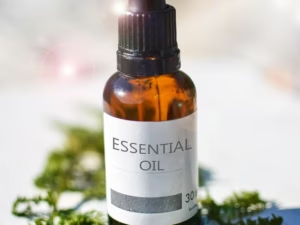
Aromatherapy is simply the deliberate use of plant‑derived aromatic oils to influence how your body and nervous system are behaving. It is not magic, and it is not a substitute for medicine where medicine is clearly needed. Used properly, it is one more lever: something you can add to touch work, breath work, and basic self‑care to make it easier for the system to shift gears.
That shift can show up as less anxiety, easier sleep, better tolerance of pain, or a slightly clearer head on days when you would otherwise be dragging. The oils themselves are not doing everything. They are inputs. Your nervous and endocrine systems do the rest. Understanding that keeps you out of the hype and lets you use the tool for what it can actually do.
What Aromatherapy Really Is
At base, aromatherapy is exposure to volatile compounds from plants, usually through inhalation, sometimes with diluted topical application. Those compounds hit receptors in the nose and skin, and those receptors feed into brain regions that regulate emotion, arousal, and basic physiological responses. That is the biological side. The other half is psychological: associations, memories, and expectations tied to particular smells.
If you have ever had your mood change abruptly because you walked past a bakery, a forest, or a hospital corridor, you already know how strong that channel is. Oils and blends are a way of deliberately triggering certain kinds of responses instead of letting random environmental smells do it for you.
Stress and Anxiety
The most honest use case for aromatherapy is stress management. Certain scents are broadly calming for many people: lavender, chamomile, bergamot, woods, and some resins. They do not erase the cause of stress, but they can make the nervous system less jumpy. A diffuser, an inhaler stick, or a small amount of diluted oil under the nose or on the upper chest gives a constant low‑level signal: not a crisis right now.
That signal is more effective when you pair it with behaviors that support the same message: slower breathing, stepping away from screens, and not trying to grind through fifteen tasks at once. Think of the oil as context, not as the entire intervention. If everything else you are doing screams danger, no scent is going to fix that.
Sleep and Downshifting
A different but related use is sleep support. People who cannot sleep are usually not lacking a particular smell; they are stuck in the wrong gear. Their system is still running a daytime pattern of vigilance. Calming scents before bed or while falling asleep—lavender, cedar, certain florals—can be part of teaching the body what “night mode” feels like.
Again, the oil is not a sedative in the pharmacological sense. It is a cue. If you pair the same scent with a consistent pre‑sleep routine over time, the association strengthens. Smell the blend, do the same simple wind‑down behaviors, and the body begins to move into that state more easily. If you use stimulating scents at all hours and then throw lavender at your insomnia once in a while, you will get less out of it.
Mood and Emotional Tone
On the emotional side, certain oils tend to push people toward a brighter or more engaged state: citruses, some mints, some spices. They can cut through a flat or dragged‑out mood enough that you have the energy to do the next thing. They are not a cure for depression. They are one way of nudging a system that is already capable of moving but is stuck in inertia.
There is also the basic fact that deliberate self‑care changes how you relate to yourself. Taking ten seconds to put a drop of a blend on a tissue and breathe it in before you go into a meeting, write something difficult, or get in the car is a small, concrete action that says, “I am paying attention.” That matters. It changes the way you experience the next hour, even if the chemistry is modest.
Pain and Physical Discomfort
Some oils have compounds with mild analgesic, anti‑inflammatory, or counter‑irritant properties: peppermint for a cooling feel, eucalyptus for a sense of openness, some resin and wood oils for a subtle warming effect. Diluted correctly and used with common sense, they can make aches and tension feel less intrusive. On their own, they are not strong. Combined with manual work, heat, or focused breathing, they can tip the scales.
For example, a light blend in a carrier oil on the neck and shoulders before or during massage can increase the sense of relief without changing the underlying technique. A breathable, non‑greasy application on the chest during a cold can make each breath feel less restricted, even if it does not change the course of the illness itself. You are working with perception and reflexes, not just with tissue.
Respiratory and Immune Support
Oils in the eucalyptus, conifer, and certain herb families have long been used as decongestant and antimicrobial supports. Inhaled in reasonable amounts, they can help you feel like you can breathe more freely and can make the air feel “cleaner.” That does not mean they sterilize your environment or make you bulletproof. It means they add a piece to your overall approach: hydration, rest, fresh air, and not being careless about exposure.
Diffusing strong oils nonstop in a closed room is not clever. It irritates mucous membranes and can aggravate headaches or asthma. Short, targeted use is usually better: a few minutes in the shower, a brief diffusion when you first lie down, or an inhaler you can move away from your face as needed. More is not better here.
Skin and Topical Use
Some oils are useful on skin when properly diluted: soothing redness, supporting wound edges, or helping with minor blemishes. The problems start when people treat undiluted essential oils as if they are moisturizers. They are not. They are concentrated chemical mixes that can burn, sensitize, or injure tissue when misused.
Topical aromatherapy for most people looks like this: a small percentage of oil in a decent carrier (fractionated coconut, jojoba, grapeseed, etc.), applied to intact skin, kept away from eyes and mucous membranes, and stopped immediately if irritation shows up. It is a way to add scent and mild local effects to massage oil or self‑care products, not a replacement for a sane skin‑care routine.
Cognitive Clarity and Focus
Some scents reliably wake people up a notch: peppermint, rosemary, sharp citruses. Inhaled in short bursts, they can help you punch through mid‑afternoon fog or stay alert while you do tasks that are boring but necessary. They do not make you smarter. They make it slightly easier to keep your attention where you want it for a while.
If you choose to use aromatherapy this way, keep the doses small and the timing deliberate. You use stimulating scents for a specific block of work, then stop. You do not run them all day and then wonder why your nervous system will not calm down at night. You also do not use them to prop up chronic sleep deprivation and then call that “biohacking.” They are support, not replacement for basic needs.
How It Interacts With Massage
Layering aromatherapy onto massage is not complicated. The core work is still mechanical: pressure, stretch, movement, and presence. Scent becomes part of the session environment. Calming oils can make it easier for clients to drop into parasympathetic states. Uplifting scents can help people who are numb or flat feel engaged enough to participate in their own process. Either way, the point is to match the blend to the person and the goal instead of defaulting to whatever smells nice to the therapist.
In a massage context, less is usually enough. A lightly scented room, a modest amount of diluted oil on areas close to the nose and mouth, or a drop on a tissue tucked near the face can do the job. Heavy, cloying application is counter‑productive. It overwhelms and can trigger headaches or nausea. Clients with chemical sensitivities, asthma, migraines, or trauma histories around scent need to be asked explicitly whether they want any aromatherapy at all.
Limits and Risk Management
There are limits that matter. Essential oils are not taken internally without clear indication and a qualified professional managing the risk. They are kept away from infants, pets, and anyone with known respiratory fragility unless you know exactly what you are doing. They are stored properly and treated like the concentrated substances they are, not like harmless perfumes.
From a clinical standpoint, aromatherapy is a low‑risk adjunct when used with respect and basic knowledge, and a high‑risk distraction when people try to use it as a cure for conditions it cannot touch. It will not fix structural pathology, severe mental illness, or systemic disease. It will not detox your organs or purge vague “toxins” that no one can define. It can, however, make it easier for your existing systems of healing—sleep, digestion, tissue repair, emotional processing—to function in an environment that feels less hostile.
Using Aromatherapy Intentionally
The difference between gimmick and tool is intention and follow‑through. If you simply buy whatever blend is trending and hope it will solve your life, you will be disappointed. If you decide exactly what you want help with—calming down at night, not spiraling during the day, tolerating discomfort during bodywork—and pick one or two simple applications to support that, you are using the modality as intended.
That might look like choosing one calming scent that you use only in the evenings, pairing it with a basic wind‑down routine, and giving it a few weeks before you decide whether it is actually shifting anything. Or it might be a focused blend you use only at the start of massage to help your system recognize that this is safe territory. Anything more complicated than that usually adds confusion without adding value.
If you want to see how scent is realistically integrated with touch, energy work, and nervous‑system‑focused care instead of treated as a standalone magic trick, you can explore our aromatherapy and integrative massage resource collection for applied examples.